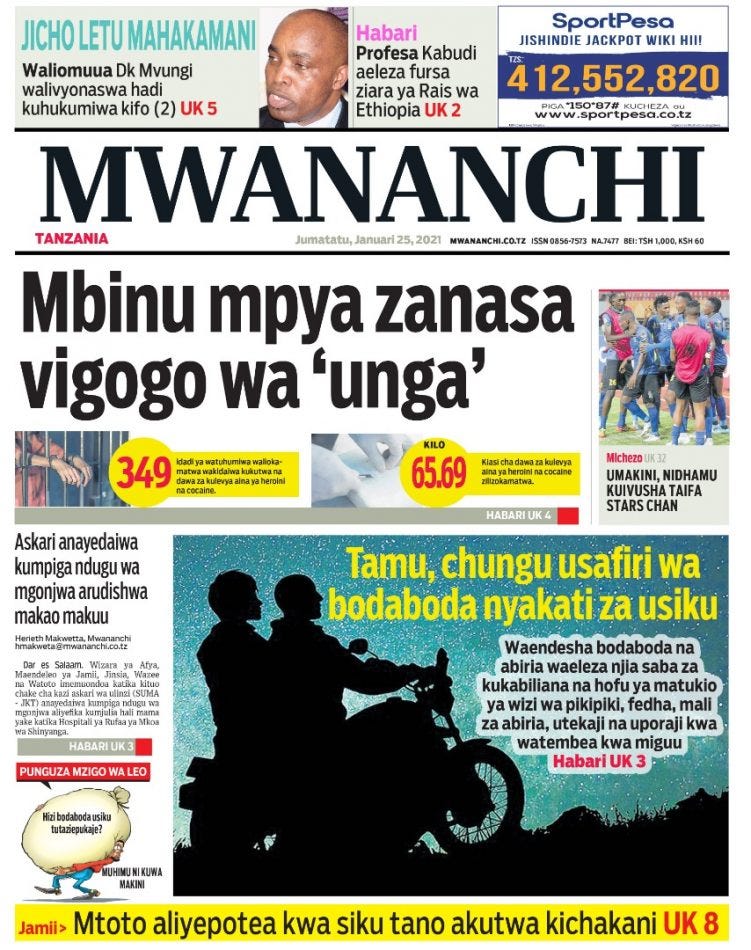
Motorcycles and the Media in Tanzania
Tom Courtright · 7 May 2022
Over the past month I’ve been compiling a database of newspaper articles on bodabodas in Tanzania (160+ as of now, and that’s just the English literature), as I’ve done previously for Uganda. Throughout the years of bodaboda — for Uganda, since the 1990s, and for Tanzania, since around 2010 — there are a few clear themes that come across in media coverage of bodabodas.
What gets covered (or is notable): murders of bodaboda drivers, motorcycle-driving criminals, crashes, politicians “creating jobs”, attempts at regulation, companies entrance into the boda business.
What does not get covered: the slow news, the follow-up. The usage of bodabodas to earn a living and get people to where they need to go, and what happens to politician and private sector promises.
Murders of Bodaboda Drivers
Both common and notable is that stories abound of murders of boda boda drivers, most commonly during robberies. A motorcycle can go for $1,000 to $1,500, which is a hefty sum in countries where annual earnings are around the same. It’s also a means of earning a decent living, difficult to come by in either country. So they are highly visible targets for theft, and on several occasions those thieves have taken life in their pursuit of their prize. In one case last year in Rukwa Region, Tanzania, 31 people were arrested for “allegedly possessing 21 stolen motorbikes.” One article by Daily News from October 2014 is explicitly titled “Beware of Thugs Who Pretend to be Passengers.”
However, boda drivers can also be killed for another reason: being assumed to be criminals. When villagers thought they were part of a wanted gang, they nearly lynched two drivers in Sumbawanga, southern Tanzania, who barely escaped with their lives.
Motorcycle-driving Criminals
The extreme maneuverability of motorcycles has always cut both ways — put another way, both citizens and criminals benefit from being able to squeeze through traffic jams on two wheels. The police in Tanzania have often used the media to get out their message, and from at least 2011 has been complaining about the increase in motorcycle-using gangs. There are also a number of stories about the usage of boda bodas to illegally cross to-and-fro on the Kenyan border, leading to crackdowns and the like. Bodas also tend to cross to Zambia when there are fuel shortages.
Crashes, Crashes, Crashes
Crashes are many, politicians die, fuel tankers explode.
Politicians “Creating Jobs”
What is a politician if not a job-creator? Politicians in East Africa have long learned the easiest and most direct way to “create jobs” is to give motorcycles to young men — though it has fallen out of fashion in the past few years to do so explicitly. One of the biggest giveaways was in December 2013, when the then-Minister for Natural Resources and Tourism gave 50 motorcycles to the Bukoba Motorcycle Owners and Riders Association.
Attempts at Regulation
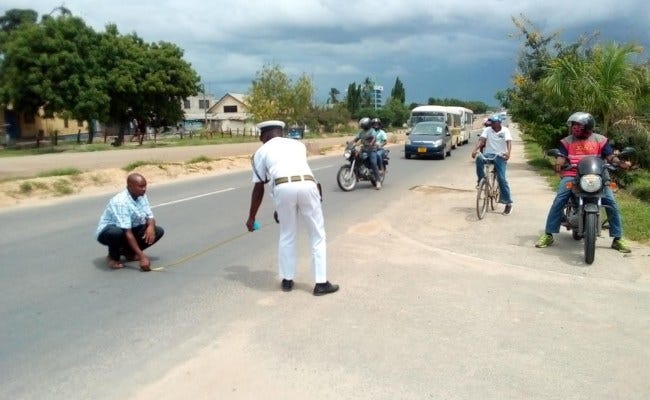
There is no shortage of this, and it’s usually fairly classic politics. The government sees the issues inherent in the boda boda industry — such as the insecurity and lack of road safety — and decides drivers should be registered, or more strongly punished, or be under curfew, or banned altogether. On the harsh end of the spectrum, there are crackdowns resulting in the arrest of hundreds of operators, such as in Tanga in 2012 or in Mwanza in 2017, and then the crackdowns can literally fill the police stations.
On the more positive end of the spectrum are stories such as the attempt to regulate bodas in Rombo region, which reportedly included money for bodas to enroll with a Community Health Fund, and the construction of bodaboda posts. However, there is rarely follow-up on such promises — so while the positive story sticks around, the government is less likely to be held to account.
Companies Involvement
There are also significant numbers of articles about private initiatives in the sector, most often insurance companies launching products promising to insure tens of thousands of drivers within a year — but again, little follow up. There are also a handful of other tech interventions, such as technology that would prevent drivers from being able to turn on their motorcycles if they didn’t have their helmets on or fairly standard GPS tracking systems.
Next up: something about op-ed writers love of describing moto-taxis as a “menace”.