Informal Multimodal Transportation
Tom Courtright · 31 October 2021
Multimodal transportation — meaning the integration of different travel modes — is widely recognized as a key element of an effective transportation system. In Uganda, it’s already moving, albeit with little protection or quality checks.
In formal transportation systems, bus stops are placed outside train stations, and parking lots for bicycles and cars are built around major stations.
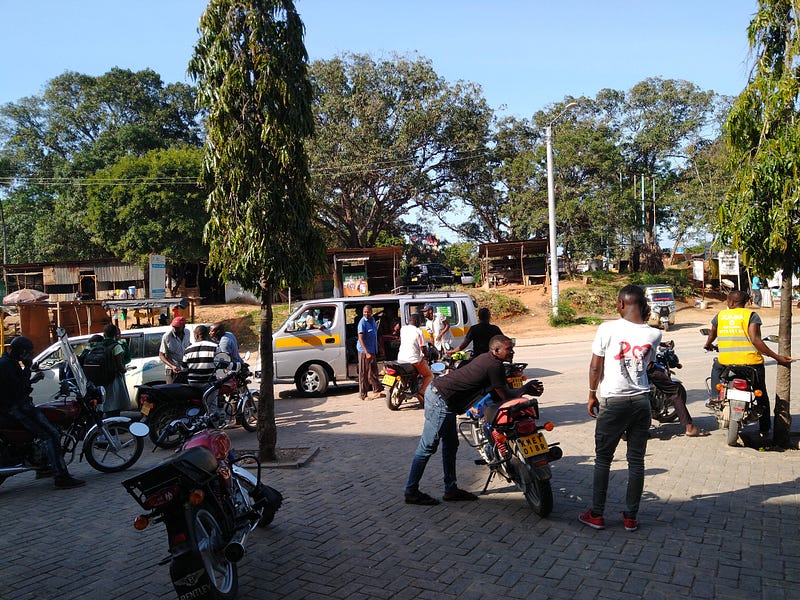
In informal transportation systems, however, boda-bodas and tuk-tuks ferry passengers to and from taxi stages and bus stops in pursuit of their own income, in place of government planned infrastructure.
The same dynamics hold true for regional transportation. In Uganda, most inter-district travel is done by bus or matatu. Passengers disembarking from buses in the city are not quite home — and the motorcycle-taxis revving just outside the bus doors are all too aware.
Swapping passengers
Demand-response is an organic, market-led solution created by individual actors on the ground — boda bodas and taxis come to bus stations looking for passengers. In the case of regional service, taxis typically end up at a taxi park that connects to other routes.
Multimodal transportation in Uganda is a robust yet physically threadbare affair. Passenger swapping starts when boda boda drivers notice the creation of a new taxi stage and begin to congregate and create their own stage to pick up passengers disembarking from taxis.
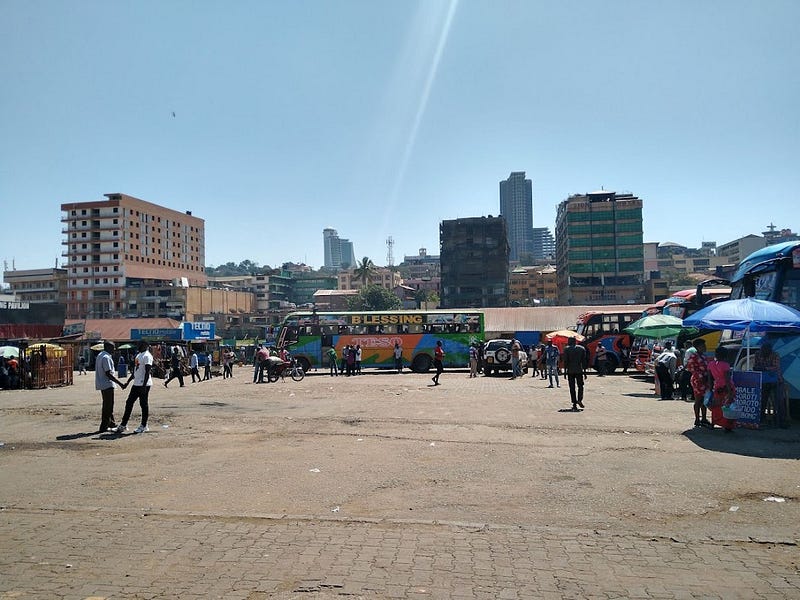
Bus stations are well-known to be one of the best stages for boda boda drivers, because passengers disembarking from the bus often stay a distance from the station — meaning higher rates — or have goods that need to be sent. There is also social networking to be done with those who can afford to travel, who can provide additional business in the future. The price of joining the stage can then be increased significantly by stage leadership — the Link Bus stage in Fort Portal, for example, costs around UGX 1 million ($280), around three times as much as other stages.
Apart from boda boda drivers, another set of beneficiaries of this informal multimodality are the taxis and buses who are enabled to focus on what they are best at — ferrying busloads of passengers on arterial routes. Operating at high capacity allows taxis to offer lower rates, as they operate on fare revenue alone. Going off the main road to collect and drop passengers closer to their origins and destinations would subject the minibuses to worse road conditions, unnecessarily slow their movements, and not take advantage of the strengths of taxi services.
Longer-distance boda boda trips would be less affordable, pricing themselves out of the range of most travelers, while walking long distances is exhausting and potentially dangerous. By taking high-capacity, low-cost taxis for low rates along arterial routes and then boda bodas or walking for shorter trips, passengers gain the best of all modes of travel.
Limitations and advantages of self-organized multimodality
In informal transportation systems, multimodality is driven by drivers who seek to maximize their passenger load. The primary benefits of this system are that it responds rapidly to passengers — there is no need to wait for a municipality’s five-year review to begin offering last-mile services. Additionally, informal multimodality does not require additional capital investments in resource-constrained places — small transportation operators, who often have multiple staging grounds, simply shift their primary place of operations from the alleyway to the bus stop.
However, this market-led multi-modality is not without major drawbacks for passengers. The primary limitations of this informal multi-modality are that there is currently limited pedestrian infrastructure — such as sidewalks, streetlights, and waiting areas — in many Ugandan cities. Also, the ability of stage leaders to respond to high demand by drivers by charging a higher entry fee means these are the most expensive stages to join. Additionally, occasionally intense competition amongst boda bodas or taxis at stages can result in conflict and passengers discomfort.
A City Fix post by Akshay Mani notes that multimodality requires three types of integration: infrastructure and operational integration, information integration, and fare integration. When stepping out of a minibus into a crowd of waiting motorcycle-taxis, the infrastructure and operations are highly functional.
Information in informal systems is disseminated primarily by transportation operators, with minimal formal guidance to the uninitiated, meaning it can be hit or miss whether a boda boda driver knows where the buses to Mbale depart from. Fare integration, however, is entirely unheard of in informal transportation, as these same forms of collaborative transportation are often competing for customers.
How to improve multimodality
To build off the informal multi-modal transportation systems, the government should first recognize taxi and boda boda associations and involve them in the planning from the beginning. One straightforward, moderately capital-intensive step could also be to ensure adequate infrastructure at stages, including shaded benches, pedestrian sidewalks, and signage for bus routes. Formal transportation companies and informal transportation associations could also participate by contributing a nominal amount — say, 20% or 30% — to demonstrate their commitment to the area.
Critically, pedestrian sidewalks in many Ugandan cities, especially Kampala, are severely lacking. Investing in this specific infrastructure would be a significant step towards improved multi-modal services, easing the journeys of commuters to and from arterial bus routes. While market-based informal multi-modality is a significant boon to travelers, government engagement and support is required to make a system that truly works for all.
Another version of this article was published at The City Fix on October 14, 2021.