
Creativity in extortion
Tom Courtright · 11 January 2021
If you’ve ever been applauded for being creative, it’s likely that you created a masterpiece of some sort and you’re proud of it. Normally, I’d expect you to eagerly show your creation. But this is not what Ugandan police officers do, because their creativity is in something abominable — extortion.
If you’ve been observant of the trend in the relationship between police officers and civilians, you should be familiar with certain phrases and actions in line with extortion. All used stealthily by police officers.
Whenever the mischievous police officers come up with new phrases and actions used in extortion, the society catches up shortly after the introduction of those new extortion keys.
On January 2, Saturday Vision exposed corrupt officers’ tactics and actions plus the creative new extortion key; weekube empi.
According to the narrative in Saturday Vision, weekube empi, which means slap yourself, is said by a traffic officer asking the driver to pay any amount of money that the driver can afford.
The interesting new phrase reminded me of all other common phrases and actions used by corrupt police officers, and I’m happy to share them here, so the reader can avoid slapping themselves:
Phrases
Kitu kidogo.
This phrase means “something small.” It’s one of the oldest ways of asking for a bribe. Nowadays, it’s rarely used. Probably because it sounded like the officers only wanted small things.
Yogera Luganda.
This means “speak Luganda.” However, when a police officer asks you to speak Luganda, he doesn’t mean that he wants to hear anything from you. No! He wants money! The Luganda that they understand is spoken by the wallet, not by the mouth.
Gula amazzi.
This means “buy water.” But it doesn’t mean going to the nearest shop to buy water for them. Neither does it mean giving them an amount of money equivalent to the cost of a bottle of water. Instead, you have to bargain with them until you agree on their preferred amount.
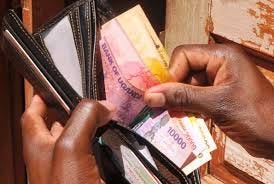
Gwa e kasawo.
This may be interpreted as, “reach for your pocket/wallet”. Self explanatory, isn’t it?
Kati mbulira.
“Now tell me”. If you don’t know what they mean, you’ll start making unnecessary explanations. Then they will tell you the next phrase.
Yogera mpulire!
“Speak louder!” You continue pleading unnecessarily. Again they’ll tell you the next thing.
Yogera ebitegerekeka!
“Say something understandable!” At this point you won’t know what to say. But they will tell you something again.
Yogera nga omuntu omukulu.
“Talk like a mature person.” If you tell them that you have said whatever you have to say, they will tell you the following:
Silya bigambo!
This means “I don’t eat words!” Now you’ll understand that all along they’ve been asking you to give them something edible. Of course you’ll give them money.
That’s why, for every encounter with police officers, civilians know that they don’t need to say anything using the mouth, but they have to say something using the wallet.
Since they don’t want to expose their bribery, they use stealthy methods to receive money from their victims. Some of the methods are listed below.
Methods and actions that prompt extortion:
(1). Traffic officer enters traffic offender’s car.
This is very common. Usually when it happens, the police officer intends to receive money when no other person is seeing. As soon as the driver pays, the traffic officer alights.
(2). Asking the driver to write their names or to sign on the express penalty form.
Sometimes when they say, “sign here”, they don’t mean it. Because if you sign that paper it means you’ll pay to URA, and the police officer won’t personally benefit. Yet paying to URA is more expensive than paying to the officer. So they will guide you on the best way to sign:
Sign using the wallet, not the pen. They will give you a clipboard containing papers but they won’t give you the pen. So you have to open the clipboard, put some money, and return it to them. The signature is done!
(3). Calling breakdown service.
Sometimes when you take long to decide whether to pay them or not, they’ll tell you that they are going to call breakdown service. This would mean towing your vehicle to the nearest police station and it would require paying for the towing, and all other penalties. They’ll tell you all this so that you choose to settle it with them.
(4). Taking the keys or driver’s license (permit) from the owners.
I’m not sure if this is lawful, but I think what they do is wrong. Quite often when a police officer stops a driver, the first thing they do is grab the car keys or ask the driver to surrender the permit. Drivers who are familiar with this police behavior do not show their permits. All they do is give them money and go. If the driver shows his permit, the police officer asks, “do you think I eat driving permits?”
You get back your keys and permit only after giving them something edible.
(5). Deliberately causing temporary traffic jam.
Though traffic jam is a normal occurrence, sometimes policemen cause it purposely to trap boda riders since smooth flow of traffic makes it hard for them to arrest cyclists. When there’s congestion, it’s their time to harvest.
(6). Using boda riders to capture fellow boda riders.
If they arrest a boda rider who has no money, they give him a hard task of capturing at least 4 other boda riders for them. If that boda rider accomplishes the task, they let him go. Then they get money from the other 4.
(7). Using extortion brokers.
One day when I was carrying 2 passengers on my bike, a traffic officer caught me. He commanded me to park on the roadside. He grabbed the key. He told me that the bike would be taken to CPS(central police station). I pleaded, but he refused to listen. I couldn’t help but walk away.
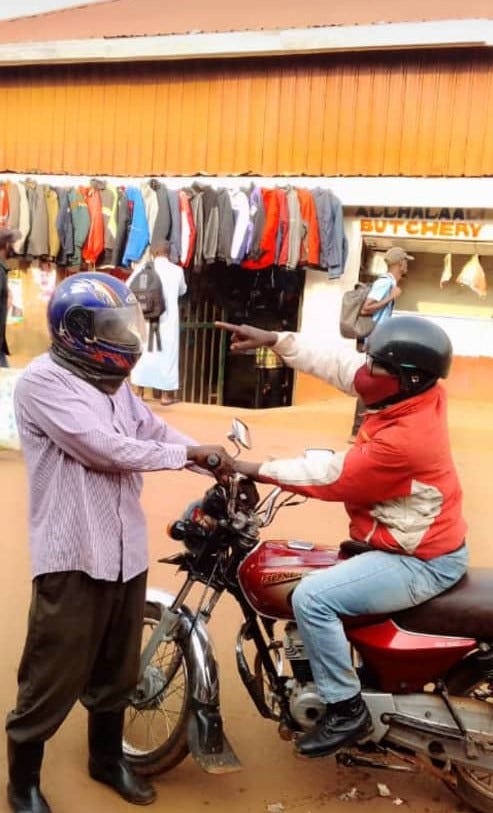
When I was about one hundred metres from him, another boda rider who works at the nearby stage followed me. He shouted from a distance, “gwe Lubyanza, lindako!” (Hey Lubyanza, wait!”). I stopped. He was holding the key of my bike. Then he said, “piki bwetuuka ku CPS sente osasula nyingi. Omusajja muwe emitwalo esatu akute! (“If the bike goes to CPS you spend a lot of money. Pay thirty thousand to this man and he will let you go!”). Ok, I said, let me go and pay him. This wasn’t exactly what he wanted. “No! I have your keys here. Give me the money and take your keys”. I gave him exactly 30,000/=. He gave me the keys. He also gave 20,000/= to the police officer, and kept the balance of 10,000/=. That was a brokerage deal.
Then I started my bike and left.
Such things are very common everywhere around Uganda but mainly in Kampala. I don’t know whether the extortion ideas are created by Uganda police as an institution or by individuals within the forces. What amazes me is that almost every driver in Uganda has encountered such bribery and extortion.
Someone should come out and claim ownership of these creative extortion tactics.