Covid-19 vs. Bajaj Ward
Tom Courtright · 12 December 2020
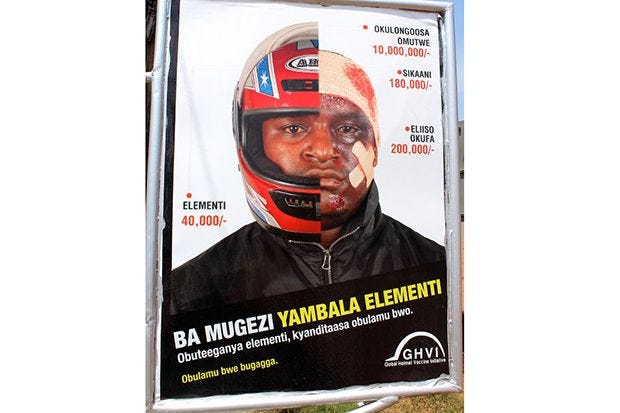
One of the most common and well-founded complaints towards boda bodas is their safety record. In Mulago hospital there is the nicknamed Bajaj Ward, where motorcycle injuries are treated. The main cause of deaths and serious injuries are head injuries, yet helmet usage, especially for passengers, remains rare.
Over the past few years, however, we have started observing some improvement thanks to awareness-raising, enforcement and ride hailing apps mandating an extra helmet be carried for the passenger. Yet a new and somewhat unexpected obstacle to helmet wearing has arrived — covid 19.
The introduction of ride hailing apps strongly promoted the use of helmets among boda riders and their passengers over the past few years. Credit goes to initiators and managers of the apps. The ride hailing companies such as Safe Boda required boda riders carry two helmets, one for the rider himself and another for the passenger. Passengers had some initial concerns about hygiene but they were mostly around lice and hair issues, which was largely solved with the introduction of cheap hairnets — paid for by riders, given away for free (and a new form of litter on Kampala streets).
With the arrival of covid-19, however, it’s been quite difficult to convince anyone that they won’t contract covid-19 from the shared helmet, as they breath on the same visor on the last passenger. Since the passenger helmet carried by the SafeBoda rider is used by every passenger that he serves, people fear they could be carrying the disease.
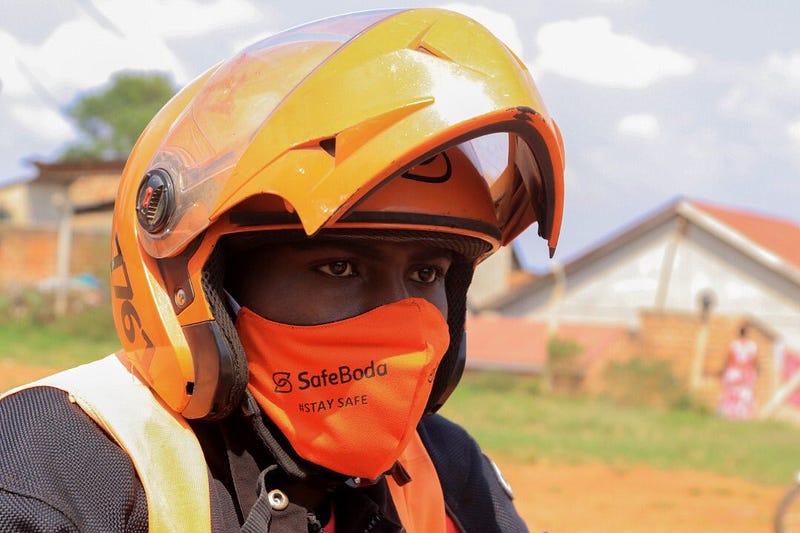
When the boda boda ban ended in July, the government required boda riders to follow certain standard operating procedures (SOPs) including that all boda riders sanitize their motorcycles and helmets before every trip. To properly wash a helmet includes soap and water, is impractical between trips. The more hygiene-conscious riders admit to washing the helmet no more than once a month, as current methods make it impossible to use for several hours afterwards, eating into valuable riding time. Alcoholic wipes could be a quick solution — but as is often the case, who will pay?
Without a solution for this, riders ought not to give helmets to their passengers anymore. Yet no one seems willing to forego using bodabodas, so the remaining option is to promote possession of helmets among boda passengers. This is done in other countries with a bodaboda culture, for example Togo, and there is no reason it can’t be done in Uganda.
Before the invasion of coronavirus, Geofrey used to meet passengers who were sensitive to hygiene, who would reject the helmet that he offered not because it was dirty but because it was used by everyone else. Some of them used to carry their own helmets wherever they went. Despite the arrival of covid-19, passenger-owned helmets have not become noticeably more common.
Yet road crash is rampant and coronavirus is not ceasing either. To achieve protection from both covid-19 and deadly head injuries, boda passengers should begin to carry their own helmets.
Original reporting by Geofrey Ndhogezi. Written by Ndhogezi and Courtright.