Accessibility; or Why We Move
Tom Courtright · 18 November 2020
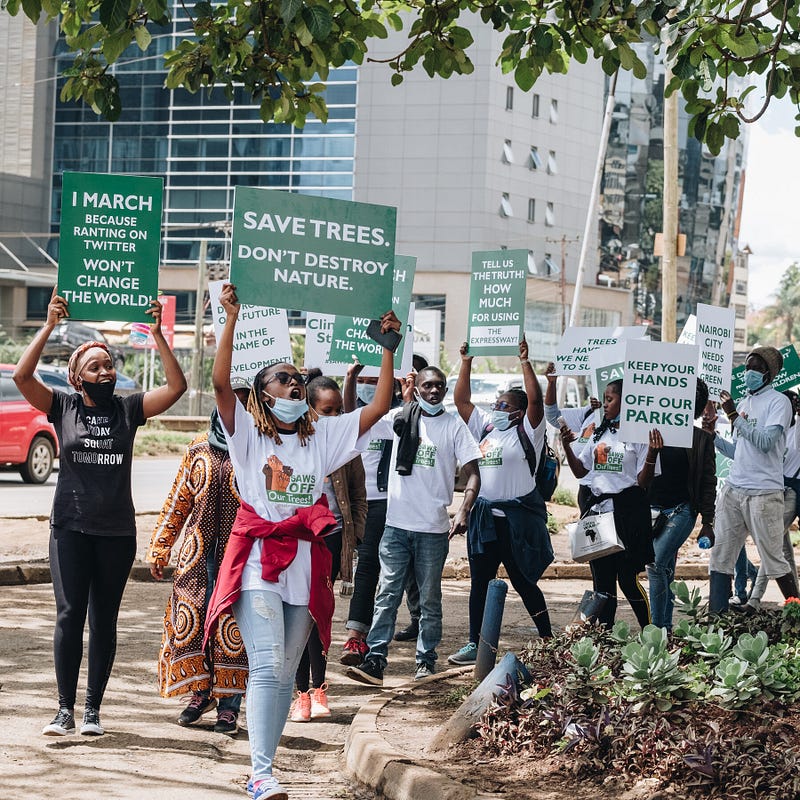
Recently, a large, historic fig tree in Nairobi was scheduled to be cut down to make way for the Nairobi Expressway, and environmental campaigners were able to get presidential protection once they got an article in the New York Times. Fantastic, tree saved. But this brought more attention to the root question: why are they building this expressway in the first place? And their answer was speed.
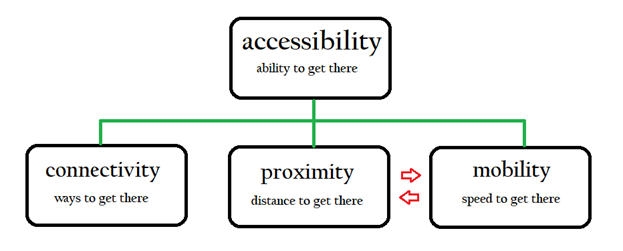
When we talk about moving through the city and transportation generally, planners and politicians tend to focus on the action of movement: mobility, usually measured with speed. Yet when we pick a boda boda, or get in a matatu, or set out on our own two feet, our goal is not to move fast: it’s to get somewhere. We have a destination in mind, and if we want to move fast, it is only to arrive there faster. To be able to get to places is accessibility.
So we know that mobility can help improve accessibility, but that accessibility is the end goal. The other two major factors that feed into accessibility are connectivity and proximity. High connectivity means we have a variety quality routes to reach somewhere: different roads between home and school, so that if one is closed for construction or washed out by the rains, we can take another.
Proximity is closeness to the destination. It’s much easier to get somewhere if it’s right next door or it’s in the same neighborhood. And this is about land and land use yet can play a critical role in determining accessibility. So yes — when we talk about transportation, we must also talk about land use. The reason you have a long commute, after all, is because your home and your work are far apart.
Soweto, South Africa, for example, was created as a black township by white Apartheid planners who wanted to use black labor in Johannesburg but didn’t want them living nearby, and so built the South Western Township (SoWeTo) away from the city. So even though Apartheid and institutionalized racism is largely over in South Africa, the spatial legacy of it remains, and people in Soweto still have a long commute to the main job centers in Johannesburg, reducing accessibility for them.
The Mobility / Proximity Problem
There’s a deeper issue with mobility that many city planners who focus on highway building and conveniently own cars ignore (looking at you, Nairobi Expressway). When we build for speed, with more and bigger highways and less intersections and speed bumps, we are making it easier for people to move farther and farther away from the city and reducing density throughout the city in general. This in turn is reducing proximity, by increasing the distance between our homes and our destinations. Simultaneously, if we focus on making everything very close and creating a dense city with lots of people and businesses and institutions close by without changing anything else, we are likely to increase traffic jams and reduce mobility.
So a focus on mobility both helps and hurts accessibility, depending on what else is happening.
Measuring Accessibility
One of the reasons this idea has been slow to take root in planning departments is the difficulty of measuring it. Measuring mobility is easy — put a few speed guns on the road and determine the average speed of vehicles on the road. But that tells us nothing about how far they had to go, what the cost is to passengers, or even if there are passengers or it’s just a bunch of container trucks.
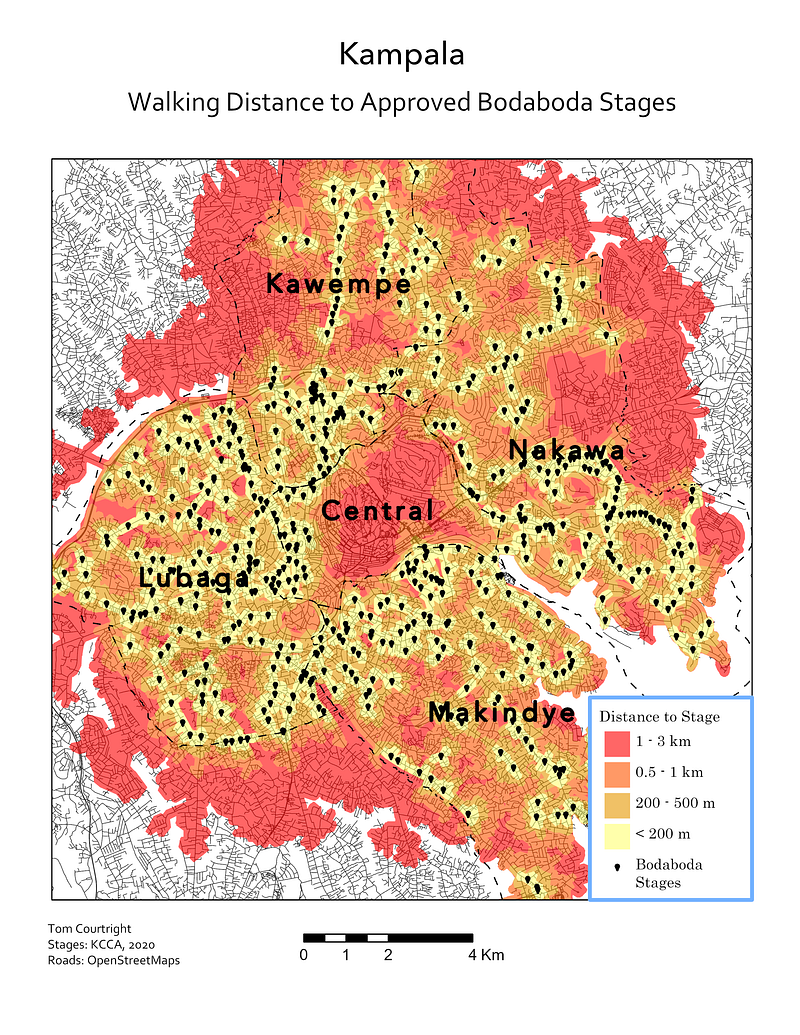
As we’ve seen, though, a number of factors go into accessibility. Proximity is one of the other key ones, and we can measure this by mapping out the different types of destinations, such as health clinics, schools, or job centers, and the residential areas, and determining that for certain neighborhoods or parishes there are 10 primary schools within 2 kilometers. ITDP has made a really cool tool for this, which shows proximity to schools and healthcare in many cities around the globe, including Kampala.
Distance alone, of course, doesn’t determine accessibility. We must also consider connectivity, not only in terms of number and quality of roads, but in terms of the costs in both shillings and minutes that it takes us to reach our destination.
Putting it all together: urban modes of travel
Now that we can see how we arrive at accessibility, we can apply it to how we move around the city and understand how it feeds into our different options for movement. And we can see that each mode of transportation has unique advantages in achieving accessibility; requiring us to build a city that has space for all modes of transportation.
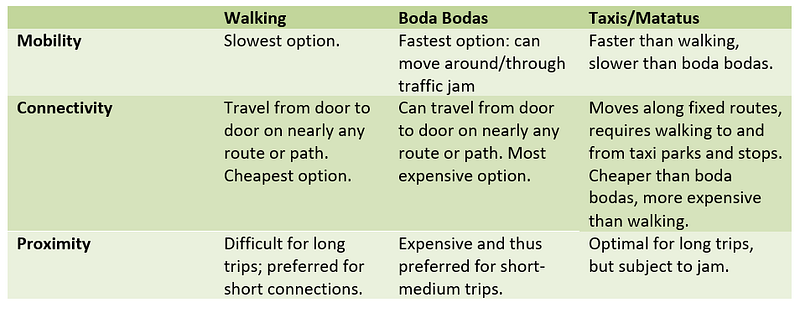
There are a few other factors we can put under connectivity that are a little more subjective and difficult to determine, such as comfort and safety, and we’ll get to these in later posts. For now, we can start to shift our mindset from moving fast to arriving: welcome, boss.